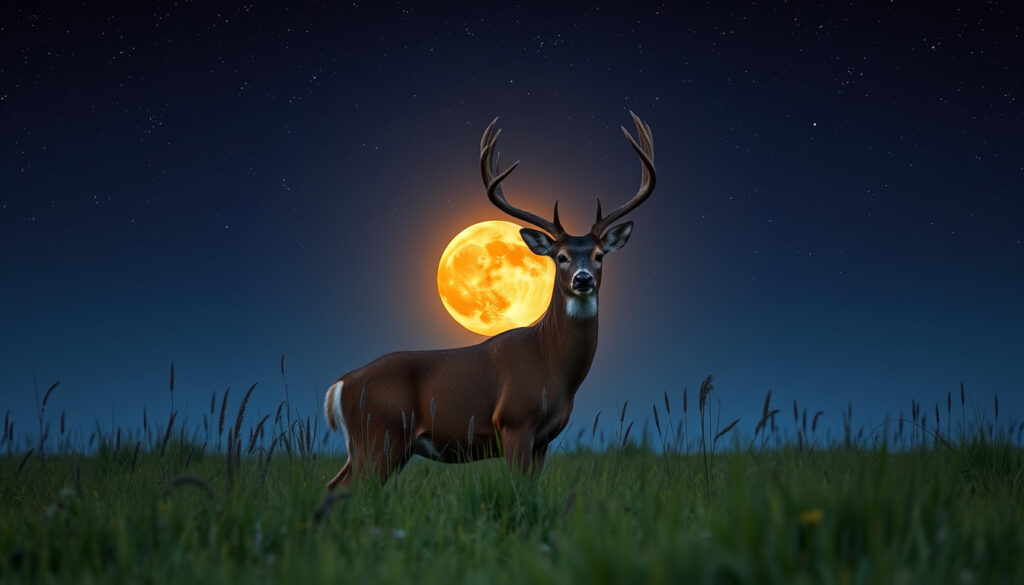
July Full Moon 2025: Buck Moon Date, Meaning & Traditions
There’s something about a July full moon that makes outdoor evenings feel a little more charged — and this year’s Buck Moon might be the clearest, most symbolically loaded one of 2025. Peaking on July 10 at 21:37 BST, it arrives at the moment when male deer’s antlers are in full renewal, a natural cycle that has inspired names for this moon across cultures for centuries. Whether you’re tracking it for spiritual rituals, astrological planning, or just love watching the sky, here’s everything you need to make the most of it.
Date: July 10, 2025 ·
Name: Buck Moon ·
Peak Time (BST): 21:37 ·
Traditional Origin: Male deer antlers in full growth ·
Next Full Moon: August 9, 2025 (Sturgeon Moon)
Quick snapshot
- Buck Moon peaks July 10, 2025 at 21:37 BST (Tybee Wellness Retreats)
- Named for male deer’s antler renewal cycle (Times of India)
- Falls in Capricorn at 18 degrees (Farmers’ Almanac)
- Supermoon status for 2025 Buck Moon — not confirmed by primary astronomical sources
- One dissenting source places it in Scorpio rather than Capricorn
- Peak illumination: July 10, 2025 (Tybee Wellness Retreats)
- Visible in India after 19:42 IST July 10; brightest July 11 at 02:08 IST (Times of India)
- Coincides with Guru Purnima in India on July 10, 2025 (Tybee Wellness Retreats)
- Sturgeon Moon arrives August 9, 2025 — the next major full moon
- Harvest Moon follows September 7, 2025
Key details about the Buck Moon at a glance.
| Field | Value |
|---|---|
| Official Name | Buck Moon |
| Date | July 10, 2025 |
| Peak Time BST | 21:37 |
| Algonquin Origin | New antlers on bucks |
Which full moon is in July 2025?
Exact date and peak time
The July 2025 full moon — the Buck Moon — reaches peak fullness on July 10, 2025, at 21:37 BST. For viewers in the United States, the peak falls at 4:37 p.m. EDT (or 4:36 p.m. ET depending on the source). In India, the moon becomes visible after 19:42 IST on July 10, reaching maximum brightness at 02:08 IST on July 11. The slight variation across sources reflects how peak illumination time is calculated versus when the moon rises locally.
Visibility and phases
The Buck Moon sits one of the lowest positions in the Northern Hemisphere sky this year, which means it rises relatively close to the horizon at dusk — a position that often makes it appear visually larger and more vivid to the naked eye. The full moon remains visible from moonrise on July 10 through most of July 11, weather permitting. For the best viewing, head outside after sunset on July 10 and find a spot with a clear eastern horizon.
The implication: if you’re in the Northern Hemisphere, this low trajectory isn’t a drawback — it’s the feature. That near-horizon position creates the kind of moonrise spectacle photographers and casual watchers alike tend to remember.
Why is the full moon special in July?
Buck Moon naming origin
July’s full moon earns the name Buck Moon from the Native American and early settler traditions that tracked seasonal changes through lunar cycles. The name reflects the biological reality of male deer (bucks), whose antlers are growing rapidly in velvet during July. The antlers — already cast in winter and now regenerating — represent one of the fastest bone growths in the animal kingdom. Ancient cultures noticed this renewal and wove it into their understanding of the month’s moon, according to Times of India.
Seasonal associations
The Buck Moon sits mid-summer in the Northern Hemisphere, a period when the landscape is lush, thunderstorms are common, and the harvest season for early crops is approaching. These conditions have generated several alternative names. Thunder Moon captures the frequent July storms; Berry Moon reflects the abundance of ripening fruit; Salmon Moon marks the fish runs in some indigenous traditions. The Farmers’ Almanac notes that Hay Moon also appears in some calendars, tying the name to early hay harvesting before August’s main cut.
What this means: July’s moon has accumulated multiple seasonal labels because the month itself sits at such a dynamic point in the agricultural and natural calendar. The Buck Moon is the most widely used today, but knowing the alternatives gives you richer context for regional traditions.
Why is the 10th July Full Moon called the Buck Moon?
Historical and Native American roots
The name Buck Moon traces back to Algonquin-speaking tribes and was adopted by early American settlers who recorded seasonal patterns in almanacs. The connection was practical and observational: July is when bucks’ antlers reach their most impressive stage of regrowth, still covered in velvety skin that will eventually harden into the rack used for mating displays in autumn. The naming convention follows a broader system in which each full moon of the year carries a descriptive label tied to nature, weather, or wildlife active at that time.
The system gained wider circulation through publications like the Farmers’ Almanac and now appears in mainstream astronomy coverage, per Farmers’ Almanac. The persistence of the name reflects its accuracy — male deer really are in this specific antler-growth phase in July, making the label both biologically grounded and culturally resonant.
What is the spiritual significance of the July full moon?
Energy and meanings
In Western spiritual traditions, the Buck Moon carries themes of determination, progress, and purposeful growth. The deer’s antler renewal is read as a metaphor for personal advancement — shedding old limitations and channeling energy into new directions. According to Keen Articles, the spiritual meaning centers on letting go of old battles and allowing challenges to strengthen rather than diminish you.
Astrologer Kyle Thomas, writing for the Farmers’ Almanac, notes that the Capricorn placement this year “will inspire us to look at the structure in our lives and to consider the legacy we are building.” This combines the deer symbolism with Capricorn’s emphasis on long-term ambition, career goals, and disciplined progress — making the Buck Moon a natural checkpoint for mid-year intentions.
Astrological influences
The Buck Moon falls in Capricorn at 18 degrees on July 10, 2025, at approximately 4:37 p.m. Eastern. This placement forms a trine with Mars, a celestial aspect that Farmers’ Almanac describes as “invigorating fire, confidence, bravado, courage, especially in relationships.” The Capricorn-Mars dynamic adds an active, forward-moving energy to what could otherwise be a reflective moon phase.
The Capricorn placement gives this Buck Moon unusual structure and ambition. It’s less about passive reflection and more about auditing your goals with honest eyes — and then acting on what you see.
What are the names of full moons throughout the year?
2025 full moon calendar overview
Following the Buck Moon in July, the 2025 full moon calendar includes several other named moons with their own cultural roots:
- August 9 — Sturgeon Moon: Named for the large fish that were historically abundant in North American lakes during August
- September 7 — Harvest Moon: The full moon nearest the autumnal equinox, traditionally helping farmers extend their working hours by moonlight
- October 6 — Hunter’s Moon: Follows the Harvest Moon; named for the traditional hunting season that opened after fields were cleared
- November 5 — Beaver Moon: Marks the time when beavers begin preparing for winter and trapping season peaked
- December 4 — Cold Moon: The final full moon of the year, marking the onset of winter
The 2025 calendar, as documented by Keen Articles and Times of India, follows the standard Native American naming system now widely adopted in Western astronomy and spiritual publications. The pattern reveals how each month received a descriptive label tied to observable natural events rather than abstract calendar mechanics.
Buck Moon rituals and viewing tips
Rituals for the Buck Moon
Common spiritual practices for the Buck Moon focus on growth and release. Intention-setting ceremonies — writing down goals for the months ahead — are standard. Cord-cutting rituals, where participants symbolically sever ties with toxic relationships by burning a physical cord under the moon, have gained traction through publications like Keen Articles. Crystal work using garnet, smoky quartz, or obsidian aligns with the Buck Moon’s energy of inner strength and renewal, per Tybee Wellness Retreats.
Full moon yoga and breathwork sessions are also popular, designed to channel the heightened lunar energy into physical renewal. These rituals share a common thread: they use the Buck Moon’s symbolism of rapid, visible growth as a template for personal change.
Viewing tips and regional notes
For the clearest views, step outside after sunset on July 10 and face east to watch the moonrise. The low angle of the Buck Moon in the Northern Hemisphere tends to produce a visually larger appearance near the horizon due to the moon illusion, though the actual angular size remains constant.
In India, the Buck Moon coincides with Guru Purnima on July 10, 2025 — a day of honoring teachers and spiritual guides. According to Times of India, optimal viewing for photography occurs in pollution-free areas away from city lights, with the brightest illumination at 02:08 IST on July 11.
The Guru Purnima coincidence gives the 2025 Buck Moon dual significance for Indian audiences — astronomical observation and spiritual gratitude practice occur simultaneously, amplifying the cultural weight of the evening.
Timeline
Confirmed facts
- Buck Moon peaks July 10, 2025 at 21:37 BST
- Named for male deer’s antler growth cycle
- Capricorn placement at 18 degrees confirmed by Farmers’ Almanac
- Coincides with Guru Purnima in India on July 10
- Alternative names: Thunder Moon, Berry Moon, Salmon Moon
What remains unclear
- Supermoon status — no confirmed primary astronomical source
- One dissenting source places the moon in Scorpio rather than Capricorn
- Limited data on Southern Hemisphere naming variations for July
“Spiritually, the Buck Moon is about determination, progress, and purposeful growth.”
“This year, the Full Buck Moon will be in Capricorn, which will inspire us to look at the structure in our lives and to consider the legacy we are building.”
— Astrologer Kyle Thomas via Farmers’ Almanac
The Buck Moon’s Capricorn placement demands accountability alongside its growth symbolism. You can set intentions freely, but this moon’s energy favors those who’ve done the groundwork — not those starting from scratch.
For sky watchers in the Northern Hemisphere, the Buck Moon offers a rare combination: precise astronomical data, centuries-old cultural resonance, and an astrological window that rewards honest self-assessment. Whether you approach it as a photographer chasing a low-hanging moonrise, a spiritual practitioner planning a release ritual, or simply someone who enjoys knowing what’s in the sky this month, July 10, 2025 gives you a full moon worth stepping outside for.
What to avoid during a full moon?
Traditional spiritual advice suggests avoiding starting new projects during a full moon, as the energy peaks and then wanes — better suited for releasing than initiating. Some practitioners also advise against making major decisions under heightened emotional states. These practices vary by tradition and personal belief.
Why is the Buck Moon so special?
The Buck Moon stands out because it marks the moment when male deer’s antlers reach their peak regrowth stage — one of the fastest bone regeneration processes in nature. Combined with its Capricorn placement in 2025, the Buck Moon carries dual symbolism of natural renewal and structured ambition.
What does the buck full moon mean spiritually?
Spiritually, the Buck Moon represents determination, progress, purposeful growth, and the willingness to shed old limitations. The deer’s antler cycle serves as a metaphor for personal advancement — visible, tangible growth that follows a period of quiet rebuilding.
July full moon 2025 spiritual meaning?
The July 2025 Buck Moon falls in Capricorn at 18 degrees, emphasizing life structure, legacy building, and career goals. Its energy encourages honest self-assessment and recommitment to long-term objectives, rather than spontaneous inspiration.
July full moon 2025 astrology?
Astrologically, the 2025 Buck Moon rises in Capricorn on July 10 at approximately 4:37 p.m. Eastern, forming a trine with Mars. This alignment brings active, confident energy that favors decisive action in relationships and career pursuits.
July full moon 2025 ritual?
Popular Buck Moon rituals include intention-setting ceremonies, cord-cutting to release toxic relationships, and crystal work with garnet, smoky quartz, or obsidian. Full moon yoga and breathwork are also commonly practiced to channel the renewal energy.
Related reading: Best Places to See Aurora in Alaska: Top Spots Guide · Grow a Garden Cooking Recipes – Best Vegetables and Herbs
The Buck Moon peaks on July 10, 2025, at 20:37 UTC, with optimal viewing tips detailed in this Buck Moon viewing guide for skywatchers everywhere.
More related posts
 George Carlin: Biography, Beliefs, and Cause of Death
 RBC Virtual Visa Debit: Access, Use, Pros & Cons (2025)
 How Many Calories in a Banana? Nutrition, Sugar, and Health Facts
 Cascade Falls Regional Park: Trail, Tips & Visitor Info
 Bank of Canada Releases Surveys: Latest Q1 2026 Updates
 Band of Brothers Characters: Actors & Real Soldiers
 Connor McDavid: Wife, Stats & Gretzky Comparison
